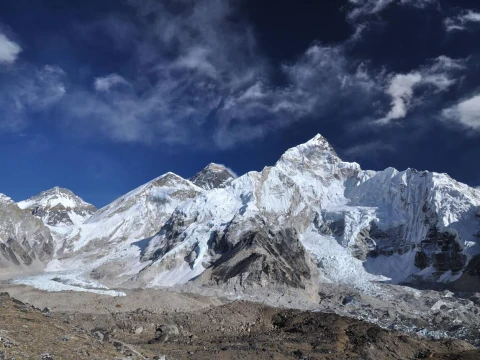
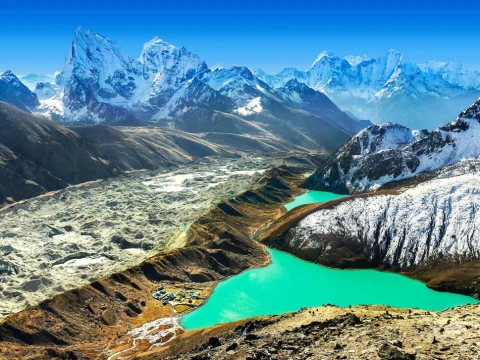
The Everest Base Camp (EBC) Trek via Gokyo Lake is one of the most spectacular trekking routes in the world, combining the iconic Everest Base Camp experience with the serene beauty of the Gokyo Lakes. Unlike the traditional Everest Base Camp route, this trek allows adventurers to explore the tranquil turquoise lakes of Gokyo Valley. It offers breathtaking panoramic views of some of the highest peaks, including Mount Everest, Cho Oyu, and Makalu. The route includes challenging passes, glacier crossings, and high-altitude landscapes, making it ideal for trekkers who want both adventure and scenic variety.
Starting from Kathmandu, trekkers fly to Lukla, the gateway to the Everest region. From there, the trail passes through Sherpa villages like Phakding, Namche Bazaar, and Machhermo before reaching the stunning Gokyo Lakes. The trek also includes an optional hike to Gokyo Ri, providing one of the best vantage points in the region. The journey continues over Cho La Pass, reconnecting trekkers with the traditional EBC trail and eventually leading to Everest Base Camp and Kala Patthar for a close-up view of the world’s tallest mountain. With the expertise of Mount Horizon Treks & Tours, trekkers enjoy seamless logistics, knowledgeable guides, and local cultural insights throughout this unforgettable journey.
The best seasons for trekking to Everest Base Camp via Gokyo Lake are spring (March to May) and autumn (September to November). During these periods, the weather is relatively stable, skies are clear, and the chances of encountering snowfall or rain are minimal. Spring brings blooming rhododendrons and lush greenery, while autumn offers crisp air and spectacular views of snow-capped peaks.
Winter (December to February) is cold with heavy snow, making trekking difficult and some passes dangerous. Monsoon (June to August) is less ideal due to landslides, heavy rainfall, and cloud cover obstructing mountain views. Mount Horizon Treks & Tours provides detailed weather updates and recommends departure dates to maximize safety and scenic experiences. Choosing the right season ensures a comfortable, breathtaking, and safe trekking experience while avoiding overcrowded trails.
Short Point List:
The trek is moderately to highly challenging, covering altitudes from 2,600m (Lukla) to over 5,300m (Gokyo Ri). Trekkers should have good physical fitness and prior hiking experience for long days of walking, steep ascents, and descending uneven terrain. The trek includes high-altitude acclimatization days to prevent acute mountain sickness (AMS), making safety a top priority.
Transportation begins with an airport pickup in Kathmandu, followed by a short flight to Lukla, considered one of the most thrilling mountain airstrips in the world. From Lukla, the journey continues on foot, with teahouse lodges and local villages providing rest stops. On some days, trekkers will cross suspension bridges, glaciers, and rugged trails. Mount Horizon Treks & Tours ensures all transportation logistics are well-organized, including flights, airport transfers, and emergency contingency plans.
Short Point List:
During the trek, accommodation is primarily in teahouses, offering basic but comfortable lodging in villages and valleys. Facilities may vary; some teahouses have shared bathrooms, hot showers (for an extra fee), and cozy common areas for meals and relaxation. Mount Horizon Treks & Tours recommends staying in well-managed teahouses to ensure hygiene and comfort.
Food is a mix of Nepali, Tibetan, and Western cuisine. Popular meals include dal bhat (rice and lentils), momo (dumplings), noodles, and soups. Trekkers should stay hydrated, drink boiled or bottled water, and consume high-energy foods to maintain stamina. Mount Horizon Treks & Tours provides guidance on healthy eating during high-altitude trekking, ensuring energy levels remain consistent throughout the journey.
Short Point List:
Trekkers require multiple permits for this journey: Sagarmatha National Park Permit, TIMS (Trekkers’ Information Management System) Card, and local entry permits for certain areas like Gokyo. These permits help conserve the environment and ensure safety in the high Himalayas.
Mount Horizon Treks & Tours handles all permit arrangements in advance, so trekkers can focus on enjoying the trek without bureaucratic stress. Carrying permits at all times is mandatory, and guides assist in inspections at checkpoints along the route. This careful permit management ensures compliance with Nepalese regulations while preserving the natural beauty of the Everest region.
Short Point List:
Choosing Mount Horizon Treks & Tours for the EBC via Gokyo Lake trek ensures a safe, immersive, and memorable adventure. The company provides expert Sherpa guides, well-planned itineraries, and support staff to handle logistics, meals, and accommodations. The trek combines classic Everest Base Camp highlights with the serene Gokyo Valley, offering unique photography opportunities and cultural experiences with Sherpa communities.
The EBC via Gokyo Lake trek is ideal for adventure enthusiasts seeking high-altitude trekking with stunning views, glacier crossings, and the challenge of passes like Cho La. With Mount Horizon Treks & Tours, trekkers receive professional guidance, pre-trek briefings, and emergency support, ensuring the journey is both exhilarating and safe. Their focus on responsible tourism also contributes to the local economy and the preservation of the Himalayan environment.
Short Point List:
Upon arrival at Tribhuvan International Airport in Kathmandu, our friendly representatives from Mount Horizon Treks & Tours will greet you and escort you to your hotel in the heart of the city. After settling in, you can relax and recover from your journey, enjoying the vibrant atmosphere of Kathmandu. In the evening, you will attend a brief welcome session with the trek leader who will outline the trek itinerary, discuss essential preparation tips, and answer any last-minute questions to ensure a smooth start to your adventure.
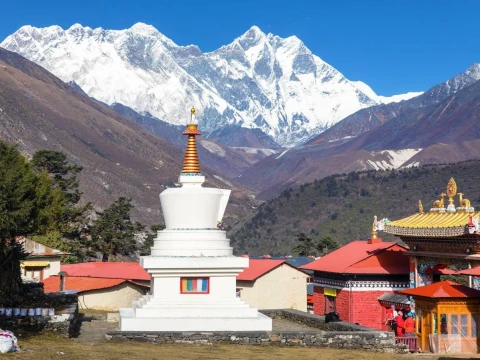
Today, you will explore the cultural treasures of the Kathmandu Valley, including the UNESCO World Heritage Sites of Pashupatinath Temple, Boudhanath Stupa, and the medieval Durbar Squares of Patan and Kathmandu. With Mount Horizon Treks & Tours, this guided sightseeing tour will allow you to understand the history, religion, and architecture of Nepal while picking up essential trekking supplies. The afternoon will be dedicated to final trek preparations, including checking your gear, reviewing your packing list, and attending a briefing on altitude awareness and safety.
After an early morning breakfast, you will take a thrilling flight from Kathmandu to Lukla, witnessing panoramic Himalayan views from the plane. Upon arrival at Lukla, you will meet your trekking crew from Mount Horizon Treks & Tours, including porters and guides. The trek begins immediately, following the Dudh Koshi River to the village of Phakding. The path winds through beautiful pine forests, suspension bridges, and charming villages, providing an ideal introduction to the Everest region’s natural beauty. You will overnight in a teahouse in Phakding.
The trail today gradually ascends along the Dudh Koshi River, passing through the Sherpa villages of Monjo and Jorsale. You will cross the famous suspension bridges and enter Sagarmatha National Park, marveling at the spectacular Himalayan scenery. By afternoon, you reach Namche Bazaar, the bustling Sherpa hub of the region. Here, the colorful markets, lodges, and cafes provide a lively contrast to the surrounding mountains. Overnight in Namche allows you to enjoy the town’s unique culture, while the views of Everest, Lhotse, and Ama Dablam captivate every visitor.
Acclimatization is vital at this stage of the trek. Mount Horizon Treks & Tours recommends a day of gentle exploration around Namche Bazaar to adjust to the altitude. You can hike to the nearby Sherpa Culture Museum or the Everest View Hotel for panoramic views of the Himalayas. Short walks around the village, interaction with locals, and visits to monasteries help your body acclimatize while providing an immersive cultural experience. This day ensures you are well-prepared for the higher elevations and challenging trails ahead.
The trail gradually climbs through dense forests of pine and rhododendron, offering occasional glimpses of towering peaks. You will pass through smaller Sherpa villages such as Mongla and Phortse before arriving in Dole. Along the way, you will notice prayer wheels, mani stones, and traditional Tibetan architecture that reflect the spiritual life of the region. Overnight in Dole provides a quiet and serene environment, perfect for rest and acclimatization, as your body continues to adjust to increasing altitude while enjoying breathtaking Himalayan vistas.
Today, the trail becomes more rugged as you ascend to Machhermo, passing through glacial streams and scattered high-altitude settlements. The views of the surrounding peaks, including Cho Oyu and Taboche, are increasingly dramatic. This leg of the trek allows you to experience the high Himalaya’s raw beauty and changing landscape. Mount Horizon Treks & Tours ensures your accommodation is comfortable with warm meals available in Machhermo. The quiet evenings here, under clear skies, provide a perfect opportunity for star gazing and photography in the Himalayan wilderness.
From Machhermo, the trail leads through moraines and glacial streams to the beautiful Gokyo Valley. You will witness the turquoise Gokyo Lakes, including the third lake, which is the largest. This section of the trek offers panoramic views of Cho Oyu, Gyachung Kang, and other towering peaks. The Gokyo village is peaceful, with small lodges providing meals and overnight stay. Arriving here, you can enjoy the serenity and the unique Himalayan landscape, knowing you are approaching one of the most scenic areas in the Everest region.
Acclimatization in Gokyo is crucial before attempting the higher passes. A highlight of the day is the optional climb to Gokyo Ri, which rewards trekkers with a 360-degree panorama of Everest, Lhotse, Makalu, and Cho Oyu. Mount Horizon Treks & Tours guides will accompany those who choose this hike, ensuring safety and optimal timing for photography and observation. The rest of the day can be spent exploring the village, resting by the lakes, or visiting local monasteries. The calm, pristine environment enhances the experience of high-altitude trekking.
The trail continues northwards along the glacial valley, crossing streams and walking past frozen lakes during colder months. Thagnak is a small, quiet settlement at the base of Cho La Pass. Along the way, you’ll encounter nomadic herders and yak caravans transporting supplies. The terrain is slightly challenging but manageable, giving a sense of the high-altitude environment. Overnight at Thagnak provides rest and acclimatization before the demanding Cho La Pass crossing, with meals served at local lodges and warm shelters ensuring a comfortable stay.
This is one of the most challenging but rewarding days, crossing the Cho La Pass at approximately 5,420 meters. The ascent is steep, with icy paths and breathtaking views of glaciers and peaks. Your guides from Mount Horizon Treks & Tours provide support and guidance throughout. After descending the pass, you trek into the Dzongla valley, where a well-deserved overnight stay awaits. This segment is physically demanding, and trekkers must pace themselves, enjoy the surrounding beauty, and prepare for higher altitude conditions in the coming days.
From Dzongla, the trail descends slightly before reaching the Khumbu Glacier area en route to Lobuche. The surrounding peaks, including Nuptse and Pumori, dominate the skyline. Lobuche is a small settlement with basic teahouses and lodges where trekkers rest for the night. Along the trail, prayer flags flutter, and the landscape is stark yet majestic. Mount Horizon Treks & Tours ensures proper acclimatization tips and overnight arrangements, allowing trekkers to recover energy and prepare mentally and physically for the approach to Everest Base Camp.
The day begins with a trek to Gorak Shep, the last stop before Everest Base Camp. After a short rest, the trail continues to the legendary base camp. Here, trekkers experience the awe-inspiring view of the Khumbu Icefall and the surrounding giants of the Himalayas. Spending time at Everest Base Camp is an emotional and thrilling experience, and you can capture photographs and soak in the sense of accomplishment. Return to Gorak Shep for overnight stay, where meals and lodging are simple but adequate.
An early morning trek to Kala Patthar offers arguably the best panoramic sunrise view of Everest, Lhotse, Nuptse, and Pumori. The climb is steep but rewarding, providing unmatched photo opportunities. After descending to Gorak Shep for breakfast, the trek continues to Pheriche via Lobuche. The descent is moderate, offering time to reflect on the trek’s progress. Overnight stay in Pheriche allows for rest and recovery, with warm lodges offering comforting meals and a chance to share experiences with fellow trekkers.
Today, the trail descends along the Dudh Koshi River, retracing the path through Pangboche, Tengboche, and Namche Bazaar. The return journey offers a different perspective on the villages and landscapes previously seen, with the descent being easier on the legs. You can enjoy tea breaks in local lodges and interact with villagers along the way. Arriving in Namche Bazaar, trekkers can celebrate the journey’s achievements and enjoy shopping for souvenirs. Overnight stay in Namche provides comfort and rest after several days at high altitude.
The trek continues with a gradual descent through villages like Phakding, following the Dudh Koshi River until reaching Lukla. The scenery is rich with pine forests, rhododendron blooms, and Himalayan views, making the final day of trekking visually rewarding. In Lukla, trekkers can celebrate the completion of the journey with their guides and porters from Mount Horizon Treks & Tours, sharing memories and reflecting on the experiences gained over the past two weeks. Overnight in Lukla is comfortable, preparing for the early morning flight.
A scenic morning flight from Lukla back to Kathmandu provides a last aerial glimpse of the Everest region. Upon arrival, you will be transferred to your hotel for rest and leisure. The afternoon allows time for shopping, exploring Thamel, or visiting nearby cultural sites. In the evening, Mount Horizon Treks & Tours hosts a farewell dinner where you can share experiences, receive certificates, and enjoy a traditional Nepali meal. This day is a time to celebrate the successful completion of your trek and reflect on the journey.
Depending on your flight schedule, you will be transferred to Tribhuvan International Airport for your onward journey. Mount Horizon Treks & Tours ensures all logistics are smoothly handled, including airport transfers and baggage arrangements. As you leave Kathmandu, you carry with you memories of towering peaks, serene valleys, and a life-changing trek through the Everest region, along with the bonds formed with fellow trekkers and guides. Your journey ends with a sense of accomplishment, inspiration, and a deeper connection to the Himalayas and Nepali culture.
Your Start Date is the day you land in Nepal, and your End Date is when you fly home.
If the set Everest Base Camp Trek via Gokyo Lake group dates don’t suit your schedule, we can offer alternative dates upon request.
Proper layering is important to stay warm and comfortable in changing mountain weather.
Good footwear makes trekking easier and safer.
The right gear keeps you safe, comfortable, and prepared.
Lightweight but important items keep you clean, healthy, and comfortable.
Keep important items safe and easy to reach.
The trek typically takes 17 to 18 days, including arrival in Kathmandu, flights, acclimatization days, and return. Mount Horizon Treks & Tours designs itineraries that balance trekking distances with rest and acclimatization, ensuring safety and comfort. The extended duration via Gokyo Lake allows trekkers to explore the pristine lakes, experience less-crowded trails, and enjoy extraordinary panoramic views of the Himalayas. Shorter itineraries are available but may require more strenuous trekking and less acclimatization time, which is not recommended for first-time high-altitude trekkers.
This trek is considered moderately to highly challenging due to high altitudes, long walking days, and varying terrain. Trekkers ascend from 2,600 meters at Lukla to over 5,300 meters at Gokyo Ri and Kala Patthar, requiring good cardiovascular fitness, stamina, and mental resilience. Mount Horizon Treks & Tours provides detailed pre-trek guidance, acclimatization plans, and optional hikes to help prepare participants. While prior trekking experience is helpful, proper preparation, pacing, and support from experienced guides make this trek achievable for motivated individuals.
Prior trekking experience is not mandatory, but it is highly recommended to be physically fit and accustomed to walking long distances in hilly or mountainous terrain. Mount Horizon Treks & Tours advises participants to engage in cardio exercises, hill walks, or stair climbing months before the trek. The Gokyo Lake route involves moderate to strenuous sections, high-altitude passes, and long trekking days, so endurance and mental preparation are crucial. Our guides provide continuous support, advice, and pacing to help novice trekkers safely complete the journey.
Altitude sickness is a common concern on the Everest Base Camp trek due to rapid elevation gain. Mount Horizon Treks & Tours incorporates acclimatization days at Namche Bazaar and Gokyo, along with gradual ascent strategies, to minimize risk. Trekkers are advised to stay hydrated, avoid alcohol, and ascend slowly. Optional hikes like Gokyo Ri and Kala Patthar provide safe acclimatization opportunities. Guides are trained to monitor symptoms and provide immediate support, including oxygen and advice for descending if necessary, ensuring safety remains the top priority.
The best time for the Everest Base Camp trek with Gokyo Lake is during the spring (March to May) and autumn (September to November) seasons. During these periods, Mount Horizon Treks & Tours ensures you experience clear skies, moderate temperatures, and spectacular mountain views. Spring offers blooming rhododendrons and vibrant landscapes, while autumn provides crisp weather and excellent visibility of Everest and surrounding peaks. Monsoon and winter months are less ideal due to heavy snow, slippery trails, and limited lodge availability.
During the trek, accommodation is primarily in teahouses or lodges offering basic but comfortable facilities. Mount Horizon Treks & Tours ensures that rooms are clean, with warm bedding and shared or private bathrooms when available. Higher-altitude stops, such as Gokyo or Gorak Shep, offer simpler facilities, while lower elevations like Namche Bazaar provide better amenities. Meals are generally served in communal dining areas, including nutritious Nepali dishes, soups, and sometimes Western options. Trekking with our company ensures that every night’s stay is pre-arranged and secure.
Meals are prepared and served in teahouses along the trail, with options including Nepali cuisine like dal bhat, soups, noodles, and occasionally Western dishes. Mount Horizon Treks & Tours ensures that trekkers receive balanced, high-energy meals suitable for high-altitude trekking. Breakfast, lunch, and dinner are available in every lodge, with snacks or energy bars recommended for trekking days. Special dietary needs can be accommodated with prior notice, and our guides help manage water purification and nutrition to maintain energy levels throughout the trek.
Essential gear includes sturdy trekking boots, layered clothing, a down jacket, thermal wear, trekking poles, and gloves. Mount Horizon Treks & Tours provides a comprehensive packing list tailored to seasonal variations and high-altitude conditions. Sunglasses, sunscreen, and a hat are vital due to intense UV exposure at high elevations. Lightweight rain gear is recommended, especially in spring and autumn. Proper gear ensures warmth, protection, and comfort during long trekking days, while our team can advise on local rental options if you prefer not to carry heavy equipment from home.
Trekking in the Everest region is generally safe when precautions are followed. Mount Horizon Treks & Tours prioritizes safety with experienced guides, trained porters, and contingency plans. Acclimatization strategies, proper gear, and regular health monitoring reduce risks associated with altitude sickness, extreme weather, or trail difficulties. All lodges are secure, and communication devices are available for emergencies. Following the company’s guidance, remaining vigilant about physical health, and trekking responsibly ensures a safe and enjoyable experience in one of the world’s most iconic mountainous regions.
While independent trekking is possible, hiring a guide with Mount Horizon Treks & Tours significantly enhances safety, navigation, and overall experience. Guides are familiar with trail conditions, local culture, and emergency protocols, which is critical in high-altitude regions. They also help with accommodations, meal arrangements, and logistical support, reducing stress and enhancing enjoyment. Traveling with a knowledgeable team provides cultural insights, personal assistance, and emergency preparedness, ensuring the trek is not only safer but also more rewarding and immersive.
To trek via Gokyo Lake to Everest Base Camp, trekkers need the Sagarmatha National Park Permit and the Khumbu Pasang Lhamu Rural Municipality Permit. Mount Horizon Treks & Tours arranges all necessary permits in advance, saving time and ensuring compliance with Nepalese regulations. Guides will carry copies of permits and provide instructions on their use while trekking. Securing these permits is crucial, as authorities strictly monitor access to the region, and trekking without valid permits is illegal.
| No of people | Price per person |
|---|---|
| 1 - 1 | $1,565 |
| 2 - 4 | $1,445 |
| 5 - 9 | $1,430 |
| 10 - 15 | $1,415 |
| 16 - 20 | $1,400 |

 (2)
 100% recommend (0)

 (0)